


Promo ✔️ Rouleur Library Timeless Reads Lapize …Now There Was An Ace – Jean Bobet – Book 👍
Original price was: $15.72.$12.58Current price is: $12.58.
- Easy, Fast Returns Guarantee
- Safe Transactions, Always
- Get the quality you deserve, for less.
- 7 Days of Hassle-Free Returns

2010 is the centenary of the introduction of the Pyrenees into the Tour de France route. It was a contentious decision at that time to send riders on their primitive bicycles into the high mountains. How Tour organiser Henri Desgrange was tricked by his assistant, Georges Steines, into agreeing to direct his riders over 2,000-metre cols is one of the great legends of Tour history.
The 1910 race was won by the French champion Octave Lapize, who added to the controversy on the top of the Col du Tourmalet by shouting out to the Tour officials, ‘Vous êtes des assassins! Oui, des assassins!’ – ‘You are murderers! Yes, murderers!’
For Lapize himself, this was his only Tour victory, but he was an outstanding one-day classics rider and also a fine track cyclist, winning a bronze medal at the 1908 Olympics. During the First World War Lapize, a fighter pilot in the French army, was shot down in June, 1917, and died in a hospital the following month. For all his initial misgivings, Desgrange had no hesitation in calling the Pyrenean venture a great success and those high cols immediately became an indispensable part of any Tour route. In the 100 years since Octave Lapize’s first epic ascent the Tourmalet has figured 73 times.
FROM THE AUTHOR
In the early 1950s, my brother Louison and I were living in the Eastern suburbs of Paris. Each time we went training, we would cycle past the Café Lapize in Villiers-sur-Marne. This Lapize seemed to follow us everywhere.At the time, Lapize toe straps were the only ones on the market. At the Montlhéry motor racing circuit there was the famous slope known as the Côte Lapize, which determined the outcome of every race held there.
Back in Villiers-sur-Marne, you couldn’t find Octave Lapize at the café any more. We knew he had been killed in the war, the 1914-18 one. People even said he died a hero.
The Café Lapize belonged to the champion’s father. One day, I ducked under the arbour at the entrance and went inside. Across the large room, I came face to face with the great Octave Lapize, in a large pastel drawing on the wall, resplendent in his French champion’s tricolour jersey. I was looking at the portrait of a true aristocrat. An inscription underneath read “Winner of the Tour de France, Paris-Roubaix (three times), Paris-Brussels (three times).”
I spent fifty years thinking about Octave Lapize. Then, one day, I decided to follow his tracks and tell his story. Thanks to him, I experienced the golden age of cycling at the beginning of the twentieth century. The Lapize years.
“Biographies of great riders abound on the world’s cycling bookshelves, but what places this on the shelf above those, is the manner and ability of its author…Originally written in French and beautifully translated by Adam Berry, Bobet’s use of language sparkles throughout the 159 pages.
…The last word on Octave Lapize has been laid before us in a manner that educates subliminally, while seeming to be mere story telling – the literary art of a true master.”
Be the first to review “Promo ✔️ Rouleur Library Timeless Reads Lapize …Now There Was An Ace – Jean Bobet – Book 👍”
Related products

Books & publications
Wholesale 🤩 Rouleur Library The Road Book 2021 – Ned Boulting ❤️



Homeware & Lifestyle
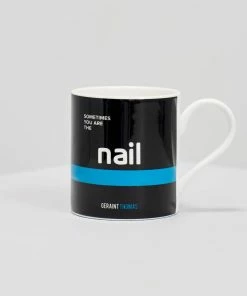
Buy 🥰 The Handmade Cyclist – Geraint Thomas – Bone China Mug Homeware & Lifestyle 👍

Books & publications
Best deal 👍 Rouleur Library Timeless Reads AMIGO – Pedro Horrillo & Nando Boers – Book 🧨

Books & publications
Homeware & Lifestyle
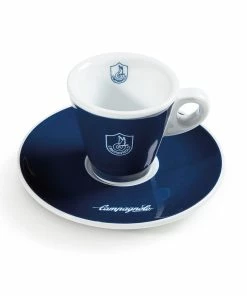
Brand new 🌟 Campagnolo – Espresso Cups X 2 Mugs, Drinkware & Coffee 🤩
Books & publications
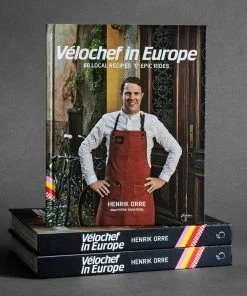
Best reviews of 💯 Rouleur Library Homeware & Lifestyle Vélochef In Europe – Henrik Orre 💯
Reviews
There are no reviews yet.